
How to Use the 'Blind Tactics' Exercise in Online Lessons
How to use the 'Blind Tactics' exercise
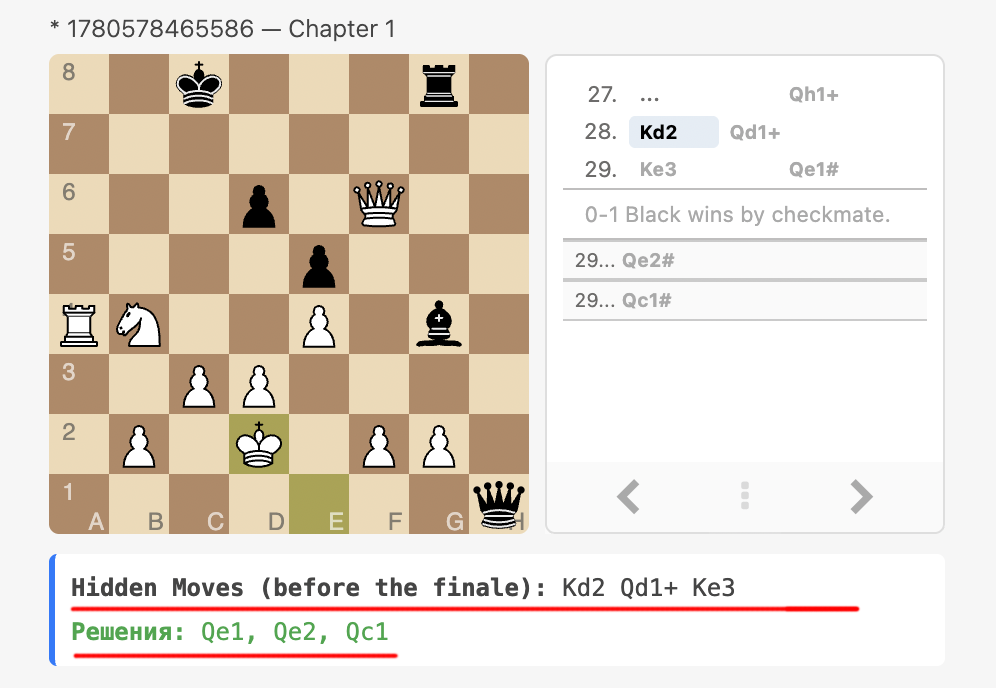
The student is shown a starting position and several moves written in chess notation (for example: Kd2 Qd1+ Ke3). The goal is to mentally calculate the resulting position without moving the pieces on the board and then find the correct continuation. In this example, any of the following moves is a valid solution: Qe1, Qe2, or Qc1.
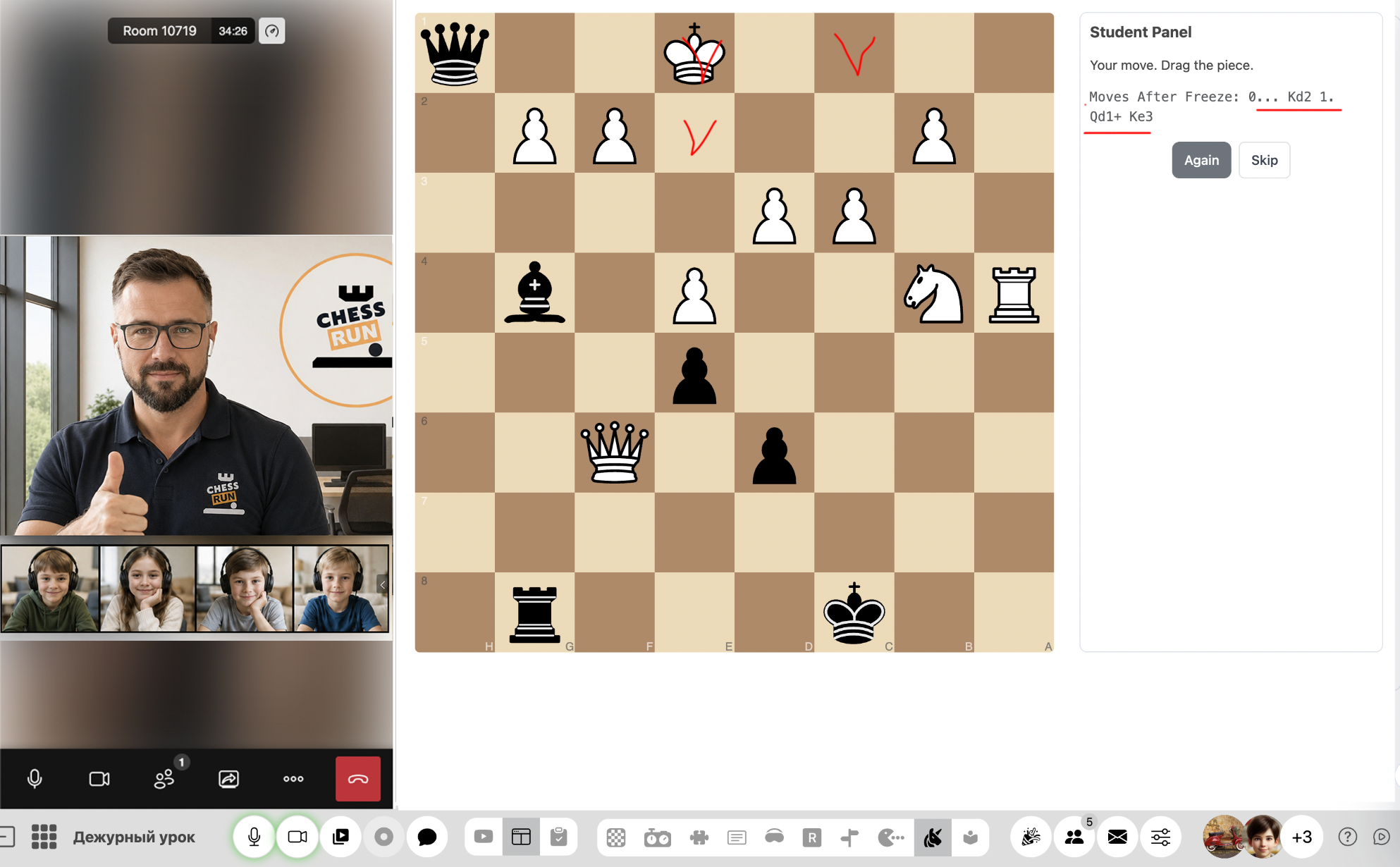
Puzzles leading to mate in several moves (e.g., mate in three) are ideal for blind tactics; the student works through the sequence mentally to reach the final position. Note: Sometimes there are multiple valid solutions—all correct if the student finds one.
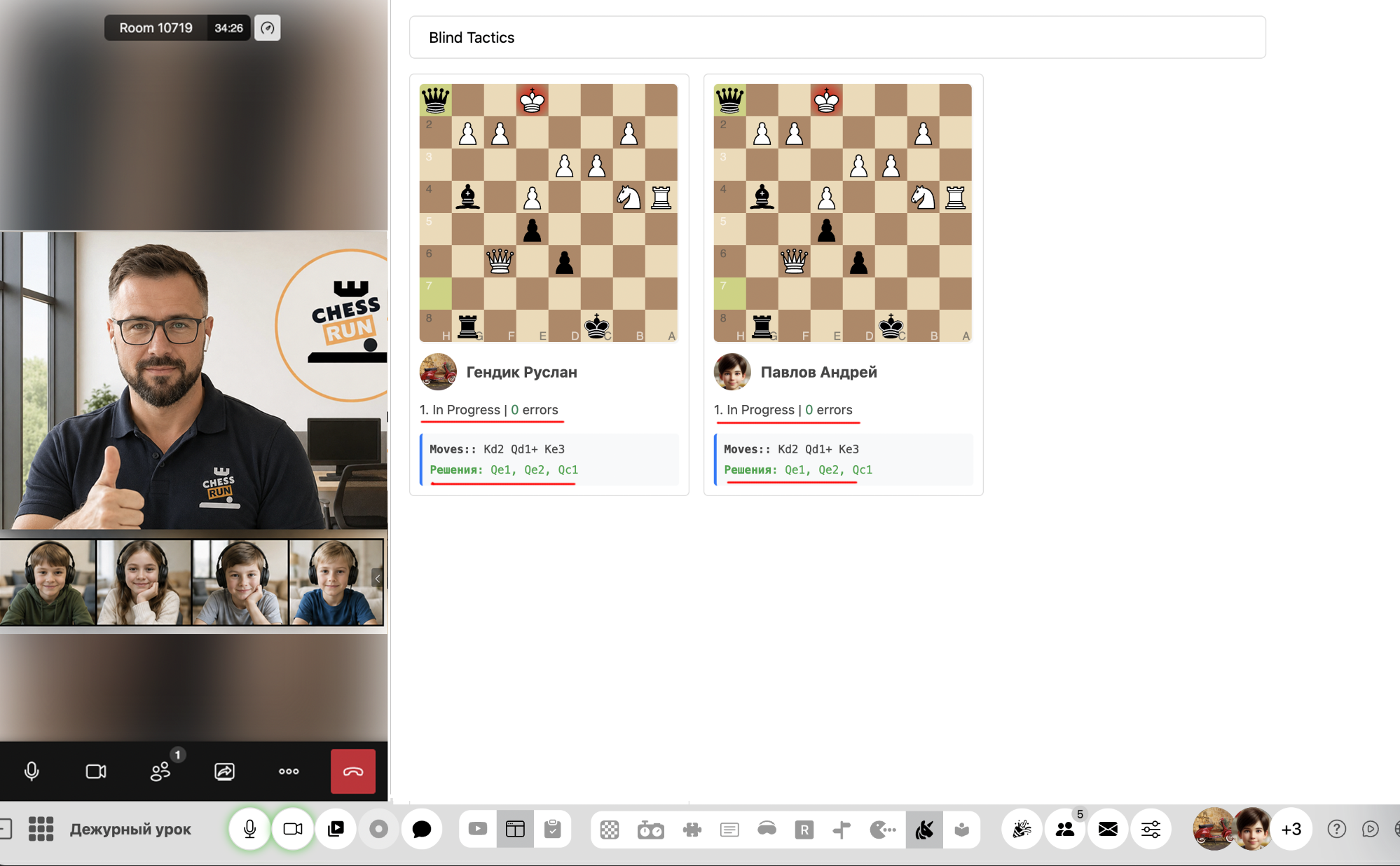
In the teacher panel, you can see if the student solved the exercise correctly: the panel displays the progress, if the sequence was visualized accurately, and whether the exercise was completed.
Blind tactics exercises develop students' visualization skills and help them navigate chess situations without needing to move pieces on the board.
FAQ
Can Blind Tactics challenges be made harder?
Yes, for advanced students you can increase the number of moves to visualize or add variations with multiple possible correct sequences.
How do I know if the student completed the puzzle correctly?
The teacher panel shows if the student completed the puzzle correctly, including whether the sequence was visualized and the final move was found.